
Samuel Farber
Posted February 12, 2026
Imperial Crosshairs

THE IMPERIALIST CRIME spree of the Donald Trump presidency spreads globally and regionally — from the U.S.-Israeli Gaza genocide, to potential new war on Iran, to the takeover of Venezuela, to annexationist menaces against Canada and Greenland — and now Washington’s intensified drive to strangle and starve Cuba.
The aggression is escalating rapidly, with weekly or even daily moves. Even in the short time since the following article by Samuel Farber was written, the United States in fact has imposed the effective blockade of oil shipments to Cuba, including issuing demands, to which the government of Mexico has apparently capitulated, to cut off Mexican oil shipments.
Already beset with crippling energy shortages and blackouts, Cuba now faces the real threat of economic collapse. While unreservedly condemning all of the United States’ criminal adventures and interventions, Samuel Farber’s article, addressed to Cuban democratic activists and allies and translated for Against the Current, explores the current critical situation as it intersects with the already-existing deteriorating social and economic conditions. It presents perspectives on how a progressive alternative might be advanced, in the face of both the imperialist offensive and the repressive Cuban regime.
Samuel Farber has written extensively on Cuba in many publications, including an important review essay in the current (Winter 2026) issue of New Politics discussing the economies of Cuba, China and Vietnam. —David Finkel for the ATC editors
CUBA IS IN in the midst of what is perhaps the most difficult situation since January 1, 1959.
The political situation continues to worsen with the systematic repression of all the collective protests, whether spontaneous like those of July 11, 2021, and the many local protests that have occurred since then, or those that have brought together fewer people as in the cases of the protests organized by Alina Barbara López Hernández who has been repressed even for the mere crime of carrying a blank sign in a park in Matanzas.
The economy continues to plummet, from the great decline in tourism to the almost disappearance of the sugar industry. In large part this is the fault of the Cuban government building hotels while tourism continues to decline to rent them out to international hotel companies at the expense of other indispensable investments.
At the same time, the regime continues, among its many other economic excesses, its systematic mistreatment of agriculture through Acopio, the state agency in charge of the compulsory “buying” of produce from small farmers at prices determined by the government, and the insufficient autonomy and facilities that it has provided to small private farmers.
To all this, it should be added that the very authoritarian political system is itself a determining economic factor in the poverty of the country as it systematically creates apathy, indifference and economic irresponsibility given the scarcity of incentives, whether economic or political such as democratic control from below, sponsored by independent trade unions and by the mechanisms of democratic control created by the workers in their offices and workshops.
The U.S. embargo or blockade has contributed, and not in a minor way, to the bad economic situation prevailing on the island. Apart from its prohibitions that have existed since the early 1960s, as with respect to the sale of Cuban sugar in northern markets and the prohibition of U.S. investment on the island, the Trump administration considerably worsened the situation with its bans on U.S. travel to Cuba and, most importantly, the powerful pressures exerted on international banks so that they do not have economic relations of any kind with Cuba.
In fact, the European Union formally complained years ago against Washington for having introduced an illegal policy of extraterritoriality when it sanctioned the economic activities of European firms in Cuba.
Consequences of the Invasion of Venezuela
The events of January 3 when U.S. military forces landed in Caracas and kidnapped the dictator Maduro have obviously transformed the situation in Venezuela as well as that of Cuba.
The importance of this fact lies not only in that Venezuela will not supply oil to Cuba (said oil supply had decreased before January 3) but because of the magnitude that Trump himself has given to said intervention.
In the political reality after January 3, the invasion and kidnapping of the dictator Maduro was of paramount importance both politically and legally. Trump blatantly proclaimed that his administration in Washington would govern Venezuela, and for the sake of historically justifying his invasion has repeatedly invoked the pro-imperialist president McKinley and none other than the Monroe Doctrine in all its colonialist fullness.
Beyond the conquest of Venezuela through the indirect control of its government, as was manifested in the recent stipulation that the Venezuelan government must submit periodically his budgets to Washington’s inspection, Trump launched himself again towards the conquest of Greenland in order to consolidate his Monroevian credentials.
It is worth noting that in all this imperial and colonial celebration there was also something completely new. I am referring to the fact that Trump disdained the traditional grape leaf cover used for a long time by Washington and said absolutely nothing to justify his policy towards Venezuela in terms of democracy, freedom, and all the other traditional ideological themes of U.S. foreign policy.
Instead, he spoke bluntly about the recovery of “our” oil that apparently several Venezuelan governments had the audacity and temerity to think that the riches of its subsoils are part of the natural treasury and history of their country.
It is very regrettable that many Cubans both in Cuba and abroad have approved Trump’s measures, but that does not mean that we should be complicit in that support which compromises us morally and politically and harms our democratic cause especially in Latin America, and certainly with those Cubans who as is their duty as citizens, take their country’s independence seriously.
However, the most serious thing for our people is that as a result of their “victory” in Venezuela, Trump and his advisers such as Marco Rubio have become over-ambitious in their imperial goals. Throughout January, major U.S. media outlets have reported that Washington is seriously considering plans to implement various actions against the Cuban government before the end of this year.
The most alarming of all these plans would be the establishment of a maritime blockade of Cuba with the specific purpose of preventing the export of oil to Cuba from any foreign country. Obviously, this would mean, far beyond the present crisis in Cuba, an almost total collapse of the Cuban economy leading the country to a chaotic situation in the style of countries like Libya and Syria.
A total blockade on the entry of oil into Cuba and other tactics of that nature such as the present embargo/blockade would be an aggression not only against the government, but also against the Cuban people in general. Therefore, such a fact would require the democratic opposition to oppose/denounce such political/economic tactics of the U.S. government.
That does not mean at all that the democratic opposition should manifest this opposition with the same purposes, terms and rhetoric as the government. In fact, this would be a great political opportunity, albeit unfortunately in the midst of a great tragedy, for the democratic opposition to show in practice the fraudulent nature of the claims of the authoritarian one-party political system.
At the same time, these proposals may mean another strategy, something like an invitation to sectors of the Cuban regime to make a deal with Trump in the Venezuelan style. In fact, it is not very difficult to imagine, for example, that the generals who lead GAESA (Cuba’s military-controlled economic conglomerate —ed.) are considering a “solution” to protect their interests.
It has been reported that, in recent days, Alejandro Castro Espín, Raúl Castro’s son, has had interviews with Trump representatives to reach some agreement regarding the Cuba’s relations with the United States. If these negotiations result in the release of Cuban political prisoners would be very good news, but we would have to be on the alert about the possibility of a Venezuelan-style agreement that would keep the present regime in power supported by a U.S. intervention.
What Does the Principle of Self-determination Mean?

For more than a century, much has been said and talked about the right to self- determination of each country. This topic received a lot of attention in the wake of World War I when both the Austro-Hungarian and Ottoman empires collapsed, potentially liberating many countries that had been subjugated by those Empires especially in central and southeastern Europe, as well as in the Middle East.
In this context, it is of interest to note that when they talked about self-determination, politicians like U.S. president Woodrow Wilson, and V.I. Lenin, the leader of the Bolshevik revolution, meant the self-determination of nations, not of states or governments. This means that respect for national self-determination does not depend on whether their governments are good or bad, and therefore it is not a prize reserved for well-behaved rulers.
Certainly, when in 1935 international public opinion joined the defense of Ethiopia against the Italian invasion, they did not do so because they supported Haile Selassie’s empire which even included slavery in its social and political system.
In many countries, these people considered that in addition to their opposition to Italian fascism, it was the Ethiopians who had the right to decide the destiny of that country, which naturally did not include the destiny of non-Ethiopian lands ruled by the Selassie empire.
In our case, what national self-determination means is that it is the Cubans, and only Cubans, who have the right and obligation to solve problems as serious as the arbitrary authoritarianism that does not even recognize its own laws, and the absence of the most elementary elements of democracy in the one-party system.
We cannot trust any of the imperialist powers as our “liberators” without seriously mortgaging the future of Cuba as is happening right now with Venezuela’s relationship with the United States.
That’s not to say that democratic Cubans won’t need help people from abroad to realize their liberating goals. The Mambises (19th century rebel army —ed.) who fought for independence from Spain were supported in large part by Cubans and friends of Cuba abroad.
The newspaper Patria founded by José Martí in New York in 1892 for the Cuban Revolutionary Party to organize the necessary armed struggle against the Spanish colonial government was financed not by the U.S. government but by Cuban residents in the United States, especially by Cuban cigar workers in Florida.
It should be noted that the self-financing of the movements greatly favors their organizing efforts, while funding by governments such as the United States apart from strengthening the political dependence on that government, also stimulates organizational passivity. In any case, it is important to note that Trump has virtually liquidated its financing to organizations such as Radio Martí, causing a great reduction in its operations, as well as well as publications such as Diario de Cuba, which has survived until now.
It is estimated that there are more than one and a half million Cubans and Cuban- Americans in the United States, and approximately a quarter of a million Cubans residing in Spain apart from tens of thousands of Cubans who live in the rest of the countries of the world.
Unfortunately, there are Cubans, especially in Florida, who have chosen the Trumpist authoritarianism path even though it has mistreated Cubans as much as it has other Latin American and other immigrants with respect to issues such as obtaining political asylum and residence permits in the United States.
The problem is not that Cubans become annexationists, a policy that certainly does not have any chance to succeed for the simple reason that the U.S. Congress, with or without a Democratic majority, would reject such an option.
Although in Puerto Rico, for example, there is a very important annexationist current, there is no possibility that the U.S. Congress, and much less President Trump, accept that country as the 51st state, apart from the fact that the annexationists have not been able to obtain a decisive electoral majority in Puerto Rico.
What is very possible is the further development of a stream of neocolonialist or Platista [after the 1901 U.S. Platt Amendment limiting Cuban sovereignty] ideology and politics.
But there are many Cubans in the United States who have not committed themselves to Trumpism. I believe that this facilitates the creation of a democratic movement of the Cubans abroad to fight against arbitrariness and authoritarianism in Cuba.
Finally, we should not dismiss U.S. civil society as another source of support for democratic Cubans. In this context, it is worth mentioning independent organizations in that country such as Amnesty and Human Rights Watch, which have denounced abuses of civil and democratic rights in Cuba for many decades.
Samuel Farber was born and raised in Marianao, Cuba and has published many articles and books about that country, as well as about the Russian Revolution and U.S. politics. He is Professor Emeritus of the City University of New York (CUNY) and resides in that city.
Go to article on the ATC website.
Related posts:
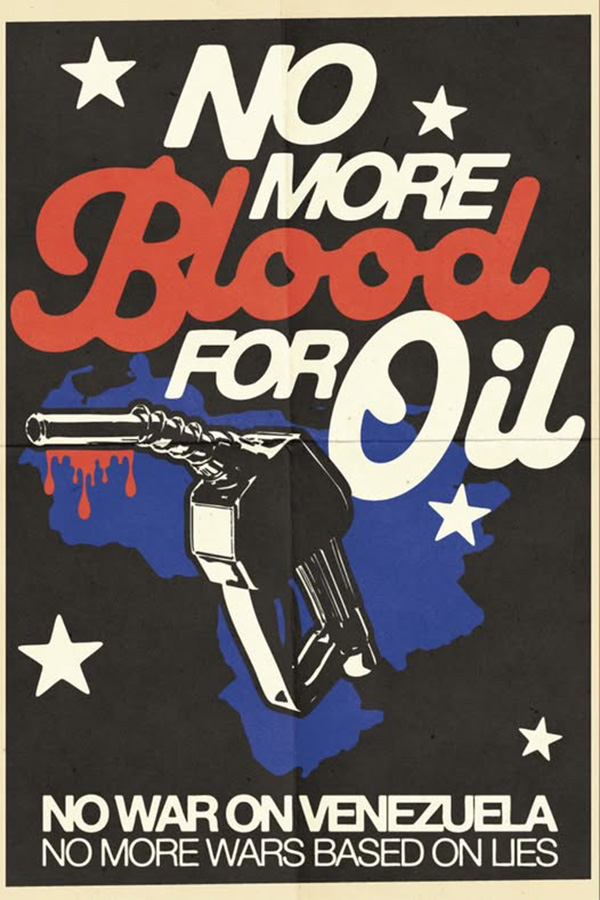 Speaking Loudly, Carrying a Big Aircraft Carrier: The Donroe Doctrine and The Return of Naked Imperialism
 New Doctrine of U.S. International Policy Under Trump, or Neo-fascism at the Helm of the World’s Leading Military Power
 Latin America: The target of Trump’s neocolonial offensive
 Beyond “No Kings”
 Nine Months of Trump: Class War, Racism, Resistance and Prospects for Socialist Politics

Leave a Reply