
Marsha Rummel
Posted October 8, 2026

The Madison, Wisconsin, Free the 15 Defense Committee, along with local unions and community organizations, organized a showing of the touring documentary film “When Ice Melts” followed by a panel discussion on Sunday, October 4 at the Madison Labor Temple.
Over 100 people attended a potluck, watched the film, heard from a panel of activists and followed up with questions.
The panel consisted of the filmmaker Kip Hedges, Kieran Knutson CWA Local 7250 President in Minneapolis, Twin Cities educator Cynthia Sarver who appears in the film, MN 15 defense attorney Bruce Nestor, Chicago activist and organizer Andy Thayer, and Alec who is one of the Minneapolis 15.
While showing the documentary, the tour is raising funds to assist the Minneapolis 15’s legal campaign. On June 16th, 2026, fifteen anti-ICE organizers were indicted on federal conspiracy charges, twelve of whom were arrested in aggressive raids across the Twin Cities.
They were charged with conspiring to prevent ICE agents from performing their duties by force, intimidation and threats, and for belonging to “antifa” groups. In fact, as panelist Alec stated, “The MN 15 activists are not special.” They were among the thousands of community members who stood up to defend immigrant neighbors and students from assault from armed ICE thugs.
As the MN 15 website says, “Community is not Conspiracy.”
Over 3000 Department of Homeland Security officers were deployed to the Twin Cities last fall and early winter and engaged in its largest immigration effort to date. It led to 4000 arrests, 2300 deportations, and the street executions of residents Renee Good and Alex Pretti.
The assault generated mass levels of community defense and protests, sending a message to the world.
“When ICE Melts” documents this period, featuring testimonies of a dozen labor and community activists who were involved in the mass resistance to the ICE invasion of Minneapolis during Operation Metro Surge.
They described organizing rapid response networks and mutual aid to protect and provide for their immigrant neighbors and students, and the January 23 mass strike, in which an estimated million people stayed home from work, shopping, and school, and 100,000 marched in bitter subzero temperatures.
Lessons: We Save Ourselves
The activists talked about the executions of Good and Pretti by federal officers. Pretti, a union nurse who treated wounded veterans, was executed the day after the successful January 23rd event in what local activists viewed as premeditated retaliation by the Trump administration.
In the film Shannon, an African American woman and community organizer, described how middle-class white decorum began to be dislodged in 2020 after the execution of George Floyd by Minneapolis police; then with the ICE invasion and neighbors being snatched from the street, the culture shifted to “How dare you.”
Shannon described the Black tradition of resistance and moral clarity that helped build local resistance in Minneapolis. Her lesson: “No one is coming to save us (except us).”
During the panel discussion, filmmaker Kip Hedges elaborated on Shannon’s lesson that “no one is coming to save us” and added that local and state politicians, local law enforcement, the court system, nonprofits and most unions are not reliable defenders of working-class multiracial communities.
He gave the example of how Minneapolis Mayor Jacob Frey and Governor Tim Walz not only did not stop the attacks but actively assisted ICE. He warned that ICE may be used to destabilize upcoming elections, and while we should defend our right to vote and vote against the fascist right, we should also understand that the answer is not electing new people who will do mostly the same things as the current politicians.
The January mass strike should be seen as a (temporary) victory. He said, “It scared the shit out of the ruling class:” Target and 60 other local corporations sent a letter to the Trump administration asking for a drawdown, and three days later Tom Homan, Trump’s border czar, came to Minneapolis with news of deescalation. His lesson: Mass Action Gets the Goods.
Bruce Nestor, MN 15 attorney, described the machinery of repression that now exists and how the strategy of the Trump regime is to habituate us to its use. He described the collapse of liberal institutions and the acquiescence of the ruling class in the face of this repression. His lesson: Democrats go along with the repression.
Nestor pointed to an1870s statute, adopted to protect federal troops from racial violence during Reconstruction, now being used against the MN 15, and described how the Department of Civil Rights/DOJ has been taken over by rightwing ideologues who are using the 1996 anti-terrorist act and 2001 Patriot Act to attack the MN 15 in “a perversion of civil rights law.”
Chicago activist Andy Thayer spoke of the failure of civil institutions – media, law firms, local law enforcement, and universities. Good politicians don’t have the power to stop ICE. “No one is going to abolish ICE.” But we are not in 1930s fascism, he says – we have some power; we must protect the right to vote and democratic freedoms. His lesson: Be Vigilant.
Kieran Knutson, CWA Local 7250, talked about the infiltration of local activist groups by federal agents and said they targeted a mass Workers Assembly held February 15, following the January 23 mass strike. According to newly released documents in the case against the indicted MN 15, undercover federal agents were present at the assembly held at the United Labor Centre and reported on the gathering.
Knutson said an attack on immigrants is now seen as an attack on trade unionists. He also said that the 2011 Wisconsin Uprising inspired him. His lesson: It is Dangerous to Underestimate the Trump Regime.
Cynthia Sarver, a school educational staff person featured in the film, says she is on the tour to help us prepare. “Where are relationships of trust, how can you break down sectarian divisions if shit hits the fan.” She told the audience, “You survived Act 10” (the Wisconsin anti-collective bargaining law).
Sarver highlighted the Workers Resist pamphlet “Preparing Your City for a Mass Strike.” Her lesson: We are Safer If We Act Together.
Marsha Rummel is a member of Solidarity. She served for 16 years on the nonpartisan Madison Common Council, where she worked on housing/homeless issues, police accountability and building community power. She is currently active in Madison DSA and as an AFSCME Retiree.
Related posts:
 Rampage of the Surveillance State: What’s Behind the Minneapolis Indictments?
 Growing Convergence of the anti-Trump movement in the U.S.
 Minneapolis: People’s Metro Surge
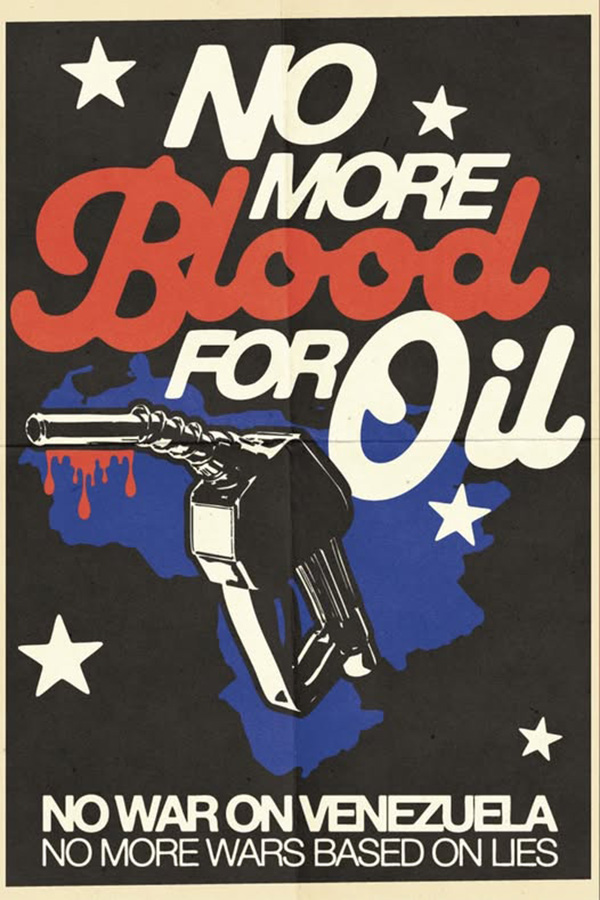 Speaking Loudly, Carrying a Big Aircraft Carrier: The Donroe Doctrine and The Return of Naked Imperialism
 New Doctrine of U.S. International Policy Under Trump, or Neo-fascism at the Helm of the World’s Leading Military Power
Leave a Reply